The Rita Citizen Asset Foundation, established by Jodo Pure Land Priest Hidehito Okochi
Article by Yoichi Yamane
Bunka Jiho (Cultural Times) April 4, 2025
Rev. Hidehito Okochi (67), chief abbot of Juko-in Temple (Edogawa Ward, Tokyo) and Kenju-in Temple (Bunkyo Ward, Tokyo), has been opening the temple grounds and buildings to the public and supporting various social activities for over 30 years. To make these efforts more rational and sustainable, the Rita Citizen Asset Foundation (a general incorporated foundation) was established last year, with Akiko Fujii of Hotto Community Edogawa as its president. By uniting temples and citizen groups under the foundation, the organisation aims to create a system where many people can contribute to society through an altruistic or compassionate (rita) spirit. The foundation supports a wide range of fields, including child support, elderly welfare, environmental issues, international exchange, and disaster relief, with citizens taking on leadership roles.
Enriching Everyone through Altruism
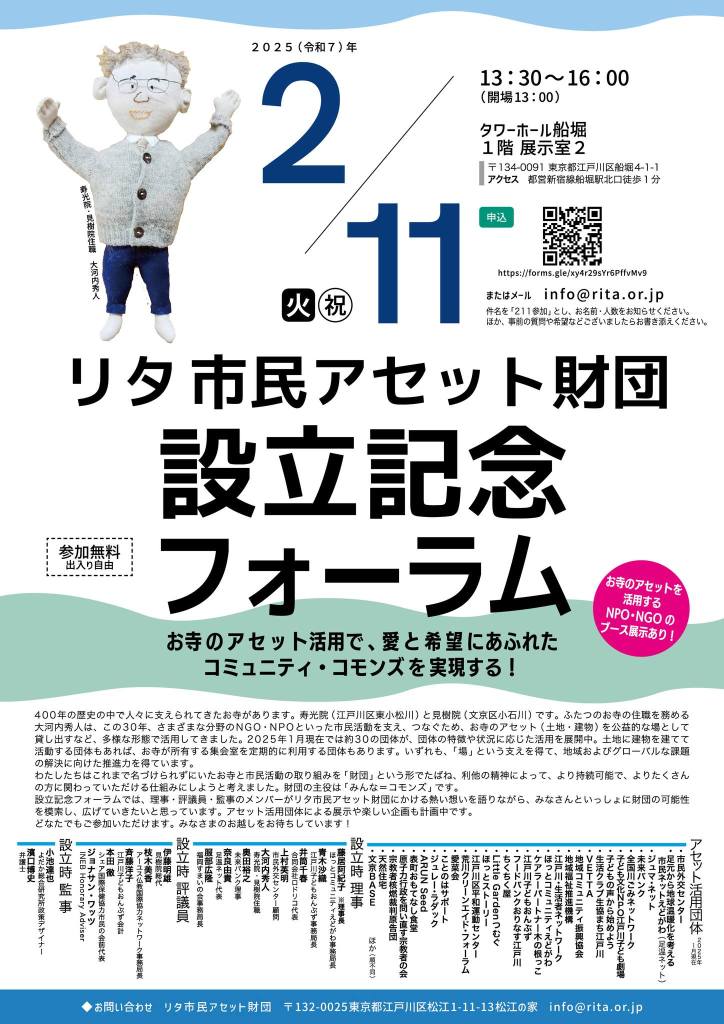
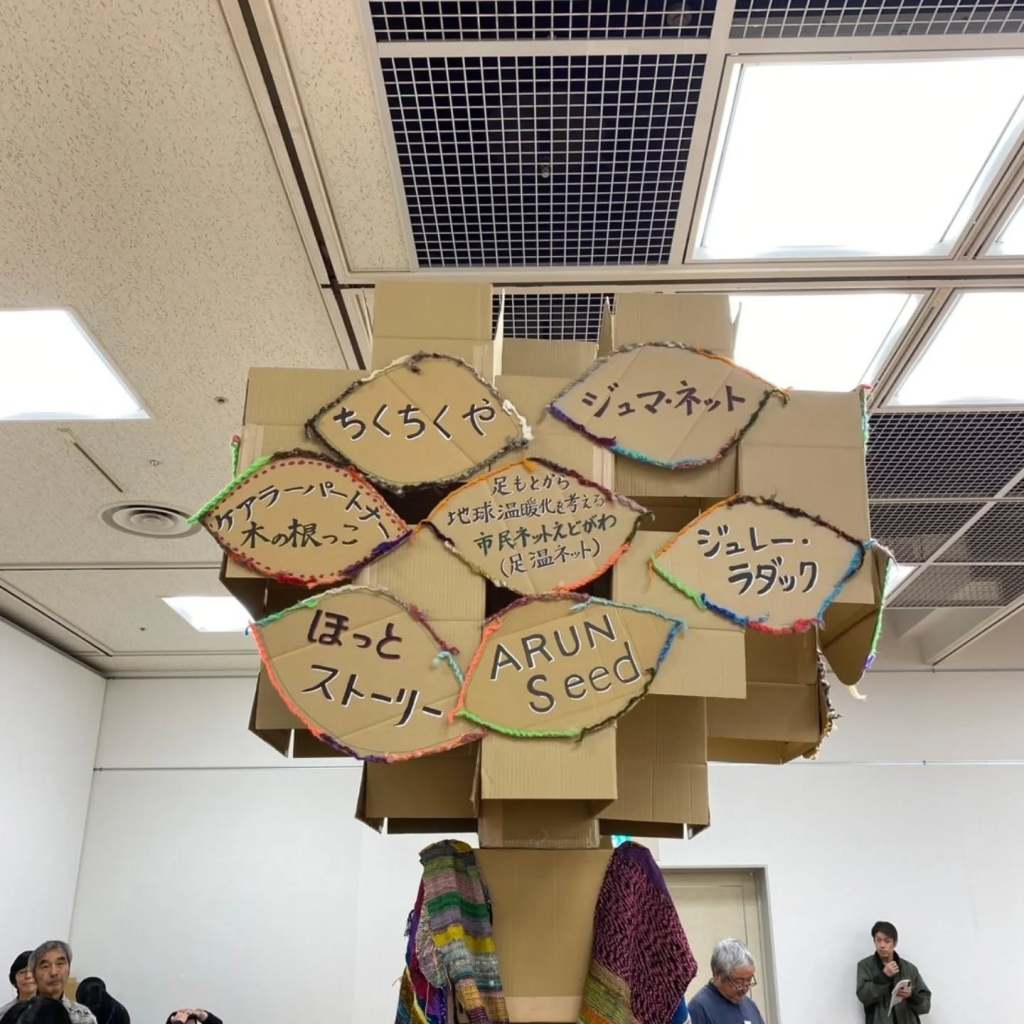
On 11 February, 2025, the Rita Citizen Asset Foundation was established at the Tower Hall Funabori in Edogawa Ward, Tokyo. Many organisations that utilise facilities owned by Juko-in temple, such as the Komatsugawa Citizen Farm, Hotto-kan home for the elderly, and Matsue House for children, as well as those connected to Kenju-in temple, showcased their activities and discussed challenges and significance.

What was the purpose of establishing the foundation?
Rev. Okochi explained that, “Many people who want to engage in social activities are looking for a place to do so. In the past, temples have provided their buildings and rooms to many organisations, but these relationships have been temporary. We wanted to create a system that would ensure sustainability. Despite the numerous challenges facing local communities and the world, many NGOs and NPOs lack both human and financial resources. The desire to contribute in any way possible became the driving force behind our efforts. We determined that a “general foundation” 一般財団法人 would be the most appropriate structure to ensure that temples can maintain control while allowing each organisation to operate efficiently.’
When did you start working on this new system?
“We began research in 2021. With advice and funding from the Niwano Peace Foundation, a public interest incorporated foundation created by the Rissho Kosei-kai Buddhist denomination, we announced our mission statement in August 2024. We raised over 5.5 million yen in donations in a short period of time and were able to establish the foundation on November 11, 2024.”
It seems that a wide variety of NGOs and NPOs have participated in this commemorative forum?
“Approximately 30 organisations have participated, mainly from the local area of Juko-in Temple in Edogawa Ward. These include Hotto Community Edogawa, which supports the elderly; the National River Garbage Network, which addresses environmental issues; SHARE, which provides health services for foreigners; and the Mirai Future Bank”, which proposes ways to use money to create a better future.”
Rev. Okochi yourself is also involved in various social activities, correct?
“I serve as the regional secretary of the Inter Faith Forum for the Review of National Nuclear Policy and as the representative director of the Palestine Children’s Campaign. The Rita Citizen Asset Foundation is also a mechanism that supports my own activities.”
What is the meaning behind the name “rita”?
“Rita is a word that contrasts with “self-interest”, which is the concept of becoming happy oneself, but the two are not contradictory. The idea is based on the Buddhist teaching that one cannot be happy alone, but only by helping others. Rita also means “shining” or “pearl” in Latin. It expresses our desire to create a rich environment together.
Common Points between Buddhism and NGOs
After graduating from Keio University and Taisho University, Rev. Okochi joined the Zenseikyo Foundation & Buddhist Council for Youth and Child Welfare. Through his involvement in various social activities, he became motivated to help the many Cambodian refugees who had escaped the mass killings carried out by the former Pol Pot regime in 1980.
How did you spend your student days and early years?
“I was born into a temple family and took novice ordination at the age of nine. Meanwhile, my siblings attended a missionary school and were involved with Christian organisations. Our family temple was small, so I felt it would be difficult to sustain our livelihood solely through temple operations. During this time, environmental issues, such as smog became important, and during my university years, I interacted with and was influenced by the older generation of the All-Campus Joint Struggle Committees (Zenkyoto), who were radically active in the 1960s.
So you have been interested in social issues since you were young?
“During my university days, I was drawn to the anti-establishment journalism of the time, but it was after joining the the Zenseikyo Foundation & Buddhist Council for Youth and Child Welfare that I truly became aware of social issues. I also belonged to the Tokyo Buddhist Youth Association, where I interacted with many people across different sects. I was greatly influenced by the efforts of Rev. Daito Noda of the Soto Zen sect in Kagawa Prefecture to support delinquent youth and truant children.”
Do you think Buddhist philosophy is useful for social activities?
“As a child, I believed that Buddhism was for the dead and Christianity was for the living. However, through interactions with other religions and sects, I began to understand the essence of Buddhism. The Buddhist teaching of “triple pure donation”—that the giver, the receiver, and the gift all being “empty” (sunnata)—resembles the work of NGOs. I believe that the accumulated donations from the distant past should serve as a support for a healthy civil society in the present era.”
The Treasure of Encountering Others
Rev. Okochi himself, through his various NGO activities, considered ways to utilise the land and buildings owned by Juko-in Temple. With the idea of creating a base for civic activities and nurturing those activities, he established Komatsugawa Citizen Farm in 1990. This initiative became the starting point for the Rita Citizen Asset Foundation.
After over more than 30 years of activities, this foundation was established through encounters and collaboration with a wide range of people, correct?
“It is supported by the unwavering support and collaboration of countless individuals, including Mr. Hiroyuki Okuda, a board member of the Mirai Future Bank and lecturer at Rikkyo University, as well as Dr. Toru Honda, a board member of SHARE and a former member of the Japan Overseas Cooperation Volunteers. The Edogawa NGO University, which we launched in 1998 with such colleagues, has evolved into a network that encompasses diverse specialisations and themes, and continues to function effectively to this day.”
What kind of organisation would you like the foundation to be in the future?
“We would like to create a system that serves as a model for religious practitioners who are committed to social activities. We will work towards obtaining recognition as a public interest incorporated foundation with tax incentives. Currently, we are working with the Public Interest Business Support Association and also receiving support from the Toyota Foundation. Both are “public interest incorporated foundations”, which is a key part of our aim to be a foundation that is independent from national and local governments and corporations and that can sustain itself and inspire hope for the future.
for a more indepth discussion with Rev. Okochi on these themes, see this article
article translated and edited by Jonathan S. Watts
 JNEB
JNEB 