January 18, 2024
TO: Mr. Fumio Kishida, Prime Minister of Japan
Mr. Ken Saito, Minister of Economy, Trade and Industry
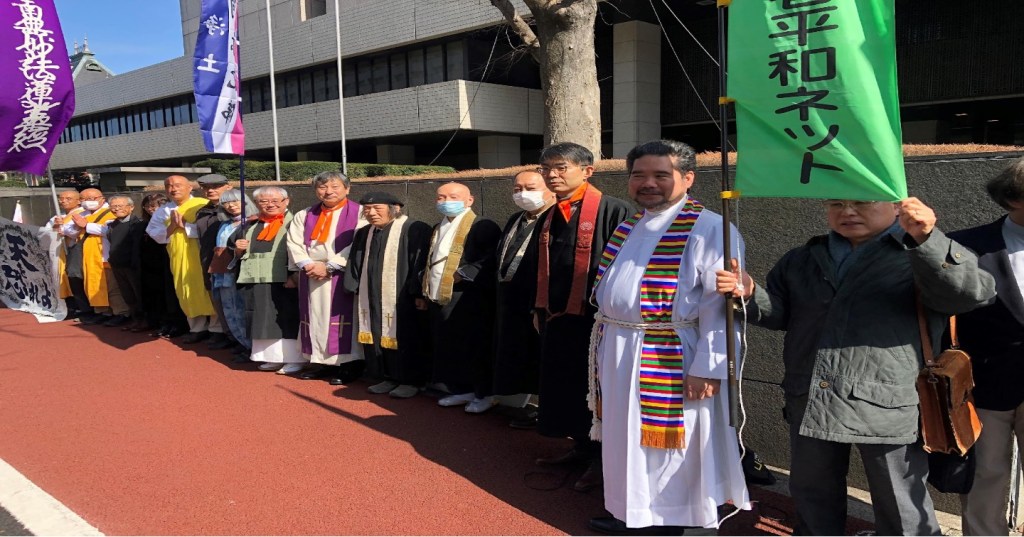
We, the Interfaith Forum for the Review of National Nuclear Policy in Japan, are a national network of religious leaders (Buddhist, Christian, Shinto, etc.) formed in 1993 who are concerned about the Japanese government’s policies regarding nuclear power.
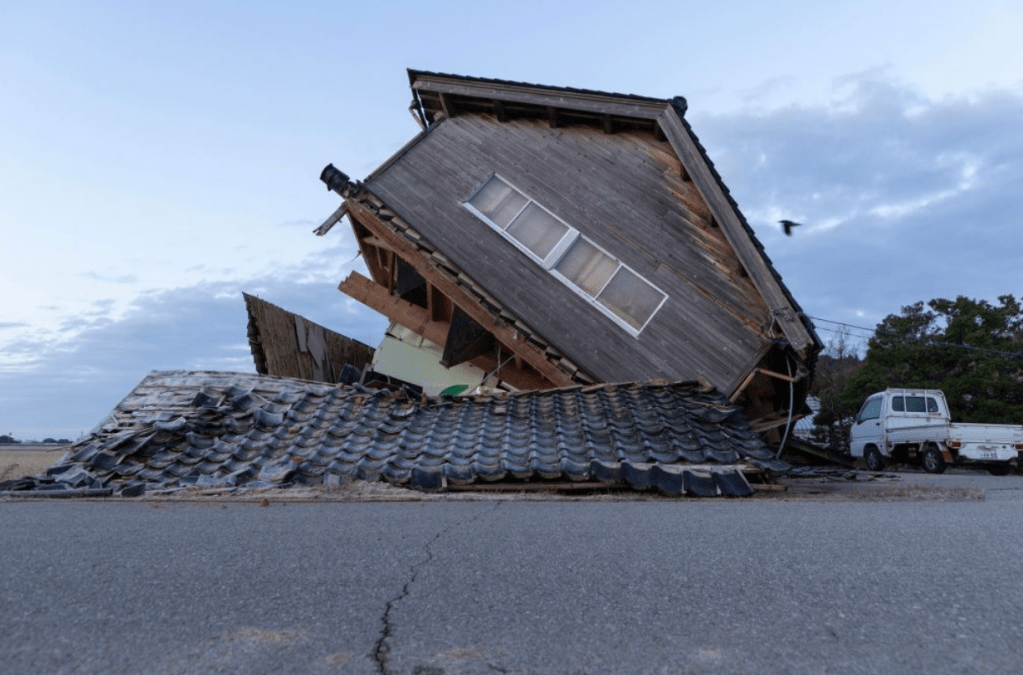
We want to highlight the following in protest of what was revealed in the aftermath of the Noto Peninsula earthquake on January 1, 2024 and admonish the government’s policy to fully restore nuclear power generation in Japan.
- Alarm bells from the natural world should be taken seriously. The Noto earthquake caused the ground to rise several meters in the town of Takaya, which has been the proposed site for the Suzu Nuclear Power Plant. If the nuclear power plant had already been built there, its pipes would have been damaged and the cooling system would have been lost, resulting in a nuclear disaster that could have surpassed even Fukushima’s. It is now clear that studies to determine the sites of nuclear power plants in Japan are not able to predict such earthquakes. Independent experts have also pointed out the possibility of the linkage between active faults. Operating a nuclear power plant on an earthquake-prone island is the height of recklessness, and the warning bells from the natural world should be taken seriously.
- Evacuation from a nuclear disaster is impossible. The recent earthquake has revealed that evacuation plans in the event of a catastrophe are theoretically picture-perfect yet are deeply flawed practically. Roads themselves will become unusable due to landslides and other upheavals in the earth. In addition, if an earthquake and a nuclear accident occur simultaneously, the shelter-in-place policy within a 5-30 km radius to avoid exposure to radiation will not be possible due to the collapse and destruction of houses. People will not be able to avoid being exposed to radiation. Evacuation plans should be subject to review by the Nuclear Regulation Authority (NRA). However, the current system of having its top three officials (Director General, Deputy Director General, and Nuclear Regulation Technical Director) come from the Ministry of Economy, Trade, and Industry (METI), which promotes nuclear power, constitutes the abject abandonment of safety.
- Nuclear power is a costly energy source. The Japanese government enacted a major change in nuclear power policy the year before last (2022) and the related GX (Green Transformation) Decarbonized Power Source Act, which includes the extension of the operating period of nuclear power plants to over 60 years, last year (2023). However, in this time space, nuclear power plants have lost their price competitiveness. Solar and wind renewable energies are growing rapidly and are the cheapest in the world (about 8-9 yen/kWh). Conversely, nuclear power is the most expensive energy source. Dr. Oshima Kenichi, an environmental economist at Ryukoku University, has calculated the nuclear power related costs for 10 years from 2011 for each electric power company based on their annual securities reports and found that the cost was about 52 yen/1kWh. The cost of nuclear power generation must also include the cost of the disposal of nuclear waste. Yet, the ruling government has revised the Basic Act on Atomic Energy in a flurry of amendments through its sheer force of numbers, adding a section on economic measures for decarbonization (i.e., support measures to be borne by the public) only for nuclear power plants, without mentioning other energy options. Most of the public is unaware of this. If nuclear power has reached the end of its mission as an industry, it is essential to honestly communicate that fact and make a major policy shift toward its abolition. Extending the operational period of nuclear power plants and building new plants are also out of the question. We demand the reversal of the current nuclear power plant policy, which disrespects human life and economically oppresses the people.
Interfaith Forum for the Review of National Nuclear Policy Board of Directors:
Rev. Hiroaki Osada (Jodo Shin Otani)
Rev. Takumi Okayama (Jodo Shin Otani)
Rev. Shingo Naito (Lutheran Church)
Rev. Hidehito Okochi (Jodo)
 JNEB
JNEB 